
My Process
Strategic Design Process in the AI Era
Product design today has evolved into orchestrating people, systems, and generative intelligence. The job has shifted from grinding out deliverables to shaping flow and alignment alongside AI. The modern tool stack makes that shift a reality.
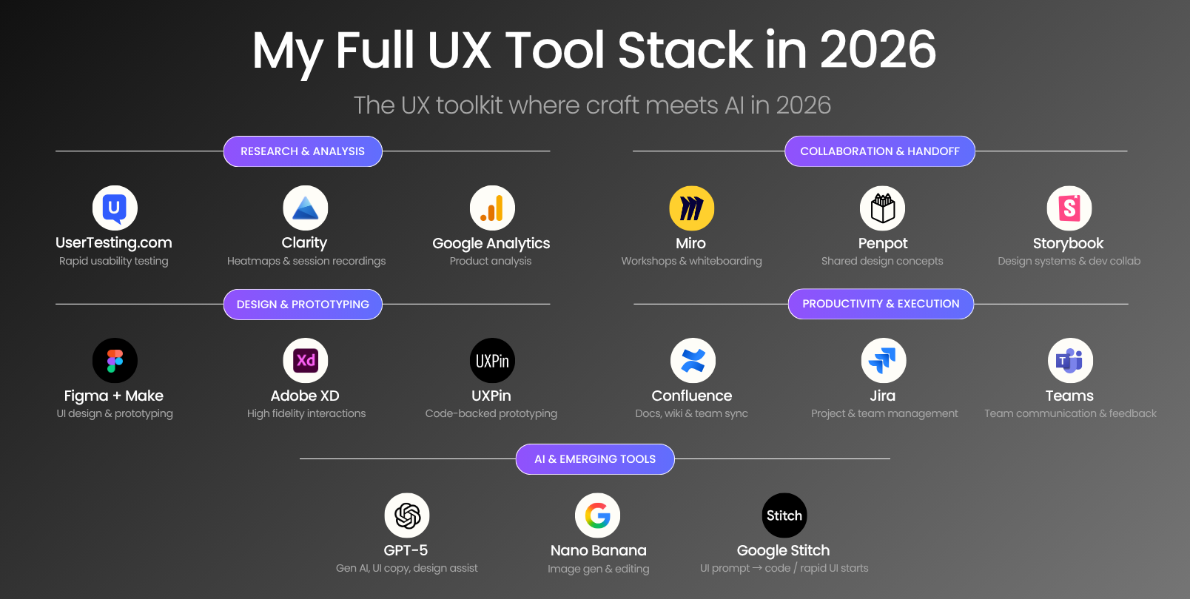
Strategic Interpretation
The manual labor of synthesis is obsolete. Today, AI tools ingest
raw qualitative and quantitative data, immediately identifying
patterns, tagging themes, and even generating preliminary affinity
maps. This frees the designer to focus purely on framing the problem
and identifying leverage points.
Rapid Validation
AI now transcribes and auto-summarizes global usability testing
sessions, condensing hours of footage into categorized pain points
(e.g., 'Navigation Friction,' 'Cognitive Load'). This enables theme
generation in hours, not weeks.
Friction Tagging
Behavioral analytics tools like Clarity and Google Analytics can
auto-tag session recordings with "friction events" and "rage
clicks." We no longer hunt for bad sessions; the system flags why
users churned and provides immediate context.
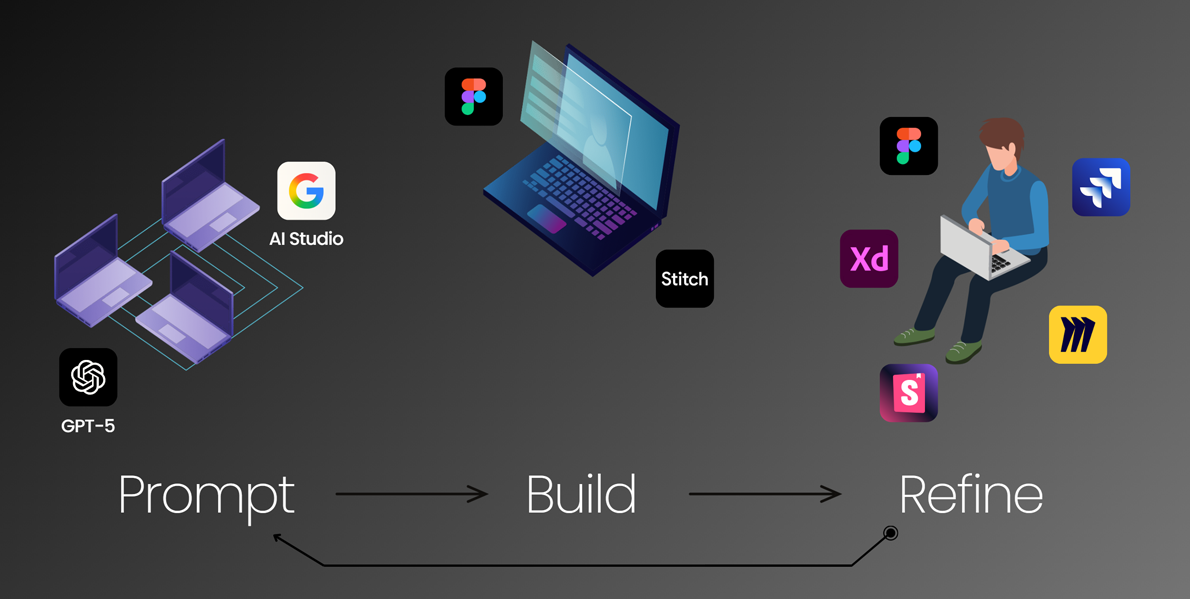
Code-Backed Prototyping
Prototyping tools are no
longer just visual mocks. They sync with
production codebases (Storybook), allowing immediate, high-fidelity
testing and bypassing the 'design vs. code'
parity problem entirely. The prototype is the spec.
"The Best UI is No UI"
Sometimes, the best
design decision is to not design anything new
at all. Strategic use of existing components, or leveraging a simple
native solution, is the mark of an
efficient, system-aware designer. We design out complexity.
System Architecture First
Great product designers
think beyond pixels, understanding the
architecture, state logic, and system design that make products
scale.
Alignment in Real Time
The concept of a "handoff" is an anachronism. Modern product teams
operate in a continuous co-creation model. The design system is the
central artifact, and documentation is living, not static. This
requires
tools that break down proprietary silos and promote a shared
component language.
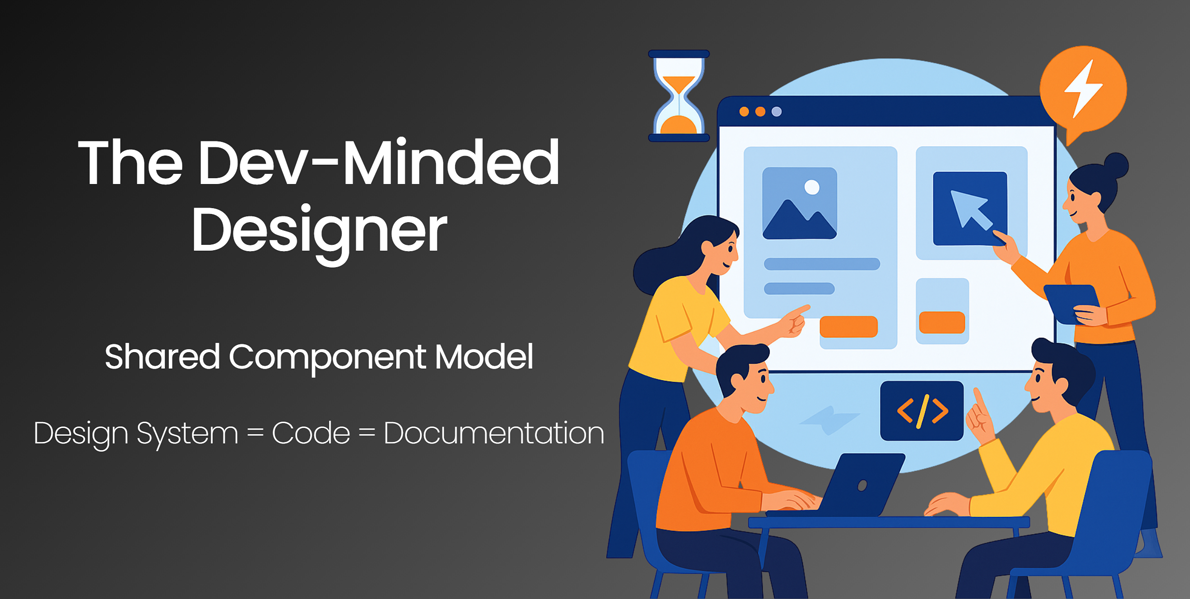
The Dev-Minded Designer
Knowing the basics of front-end development (Tailwind, component
props,
design tokens) can significantly improve designer-developer
relationships.
UX designers don't need to write production-quality code. It's all
about
shared empathy and language to minimize technical friction.
Single Source of Truth
Tools like Storybook
provide living documentation where components are testable,
documented, and
visually verifiable in code. It is essential that the whole team is
always
working with the latest, vetted assets.
Curating with Taste & Style
Product designers are no longer just executors. We’re curators and
strategists. Our value lies in crafting sharp prompts, setting clear
constraints, and applying taste and judgment to guide what feels
right.
Tools can generate endlessly, but it’s our curation and refinement
that
keep the work human.
UI from Text-to-Code
Tools like Figma Make and Google Stitch turn design prompts into
presentation-ready UI, taking us from concept to live A/B tests in
days
instead of weeks. No manual front-end work required. And the
generated
code provide useful insights for developers.
The AI Multiplier
The modern design process is defined by the AI Multiplier. Our time
is now spent
auditing, validating, and directing generative output, not creating
from a
blank canvas. Product design is still about people; AI is simply our
fastest, most efficient co-pilot in serving them.
Detailed Process Overview
+
Enterprise SaaS
platforms shipped
%
design rework reduction
Parallels design system
%
task-flow reduction
Lumen self-serve
mo
0→production
Parallels DaaS